
There are various types of cable trays, which are often used as construction products in our daily lives. Long-span cable trays are one of them. They can be independently installed on various buildings and pipe gallery supports, featuring a simple structure, aesthetic appearance, easy configuration, and convenient maintenance.
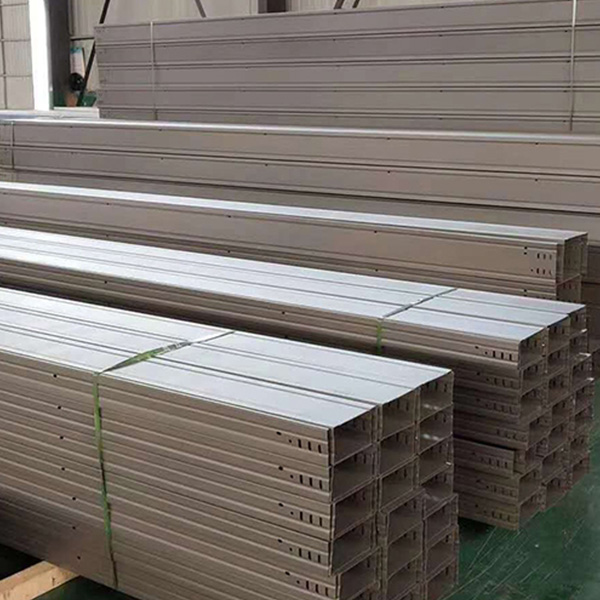
Long-span cable trays have a larger support span than ordinary cable trays. Due to their sophisticated structural design, they also offer higher load-bearing capacity compared to standard models. Therefore, they are not only suitable for overhead laying of indoor and outdoor cables in industrial and mining enterprises such as oil refining, chemical engineering, textiles, machinery, metallurgy, electric power, television, and broadcasting but also can be used as underground works—for example, supports in cable trenches and cable tunnels of subways and civil air defense projects.
Long-span cable trays include long-span ladder-type, tray-type, channel-type, heavy-load ladder frames, right-angle tees, multi-section tees, right-angle crosses, as well as corresponding connectors, covers, and pillars.
Covers are available for long-span cable trays. If covers are required, please specify when placing an order or order according to the cover model.
Surface treatments for long-span cable trays include plastic powder coating, galvanizing, or baking paint. For corrosive environments, plastic powder-coated trays are recommended; for general atmospheric corrosion protection, galvanized trays are suitable.
Dexian Explains Relevant Knowledge About Long-Span Cable Trays
Installation Notes for Long-Span Cable Trays
Tray Height:
6 connection holes at each end for trays with heights of 50mm and 100mm.
12 connection holes at each end for trays with heights of 150mm and 200mm.
Support Distance:The support distance shall be less than or equal to the allowable load and support span specified in the load curve.
Tray Width:When selecting the width of the cable tray, a certain reserve space should be left to accommodate future cable additions.
Separated Laying:When the number of power cables and control cables is small, they can be laid on the same long-span cable tray, but a partition must be installed between them to separate power cables from control cables.
Cable Fixing:
For horizontally laid cable trays, connections between long-span cable tray sections should be installed as close to the 1/4 span position as possible.
Horizontally routed cables should be fixed every 2 meters or so.
Vertically routed cables should be fixed every 1.5 meters or so.
This website uses cookies to ensure you get the best experience on our website.

 Español
 Portugues
 Pусский
 العربية



 WhatsApp
 Phone
Phone E-mail
Comment
(0)