
 Español
 Portugues
 Pусский
 العربية
Galvanized tray cable
Galvanized Tray Cable: An Overview Galvanized tray cable is a type of electrical cable designed for use in cable tray systems, offering durability, flexibility, and resistance to environmental factors. It is commonly used in industrial, commercial, and utility applications where cables need to be supported in trays rather than buried or run through conduits. The "galvanized" aspect refers to the protective zinc coating applied to the cable’s armor or tray, enhancing corrosion resistance and extending the cable’s lifespan in harsh conditions. Construction and Features Galvanized tray cables typically consist of multiple insulated conductors bundled together within a robust outer jacket. The conductors are often made of copper or aluminum, insulated with materials like PVC, XLPE, or rubber to withstand high temperatures, moisture, and mechanical stress. The cable may also include shielding for electromagnetic interference (EMI) protection, depending on the application. A key feature of galvanized tray cables is their armor or outer protection. Some variants use a galvanized steel wire armor (GSWA) or interlocked metal tape to provide mechanical strength, crush resistance, and rodent protection. The galvanized coating prevents rust and corrosion, making the cable suitable for outdoor or humid environments, such as chemical plants, oil refineries, or marine installations. Applications Galvanized tray cables are widely used in: - Industrial Facilities: Power and control wiring in manufacturing plants, refineries, and mining operations. - Commercial Buildings: Distribution of electricity in large complexes where cable trays are preferred over conduits. - Renewable Energy: Solar farms and wind turbines, where cables are exposed to weather and UV radiation. - Infrastructure Projects: Transportation hubs, tunnels, and wastewater treatment plants requiring long-term durability. Advantages 1. Corrosion Resistance: The galvanized coating ensures longevity in corrosive or wet environments. 2. Mechanical Protection: Armored variants resist physical damage from impact, abrasion, or tension. 3. Flexibility: Tray cables are designed for easy installation in trays without excessive bending stress. 4. Fire Resistance: Many galvanized tray cables meet fire safety standards, such as flame-retardant (FR) or low-smoke zero-halogen (LSZH) ratings. Installation Considerations When installing galvanized tray cables, factors like bend radius, load capacity, and environmental exposure must be considered. Proper securing with tray clamps or ties prevents sagging, and adherence to electrical codes ensures safety. Conclusion Galvanized tray cables provide a reliable, long-lasting solution for power and signal transmission in demanding environments. Their combination of corrosion resistance, mechanical strength, and adaptability makes them a preferred choice for modern electrical infrastructure. Whether in industrial settings or renewable energy projects, these cables ensure efficient and safe power distribution.
Products
Category:
-

Galvanized cable tray
Category: Long-Span Cable TrayBrowse number: 35Number:Release time: 2025-11-22 03:32:24Due to the short circuit of the high-temperature fan outside the cable, short circuits occurred in all parts of the cable. Generally, this is caused by poor cable quality due to wind exposure, resulting in severe damage to the cable at the defective points; however, obvious traces will still remain. Once a short circuit occurs in the cable tray, the entire cable may be burned out, and the slack of the cable at the defective point is slight. -
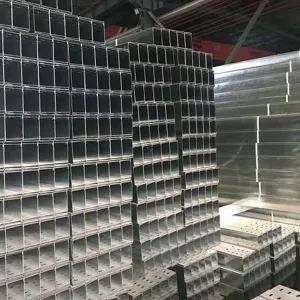
Galvanized cable tray
Category: Long-Span Cable TrayBrowse number: 30Number:Release time: 2025-11-22 03:35:59Install a set of tensioning devices under the cable tray. The galvanized cable tray forms an arch under the tension of the tensioning tendons. This generates compression on the lower cover plate of the tray and tension on the upper cover plate. This force is opposite to the stress caused by external loads, offsetting part of the working force and improving the stress state of the tray. Therefore, the prestressing method aims to reinforce the tray and correct deflection. It is simple and easy to control, but has limitations: electric ball valves are not easy to calibrate, and the tray deformation is complex.

News
Category:
No search results found!
Case
Category:
No search results found!
Video
Category:
No search results found!
Download
Category:
No search results found!
Job
Category:
No search results found!
Featured Products
No search results found!



 WhatsApp
 Phone
Phone E-mail