
 Español
 Portugues
 Pусский
 العربية
Cable Tray Hot-Dip Galvanized Production
Hot-Dip Galvanized Cable Tray Production Process Hot-dip galvanizing is a widely used method for protecting cable trays from corrosion, ensuring durability and longevity in harsh environments. The production of hot-dip galvanized cable trays involves several key steps, from material preparation to final inspection, to guarantee high-quality performance. 1. Material Selection and Fabrication The process begins with selecting high-quality steel, typically mild steel or low-carbon steel, which is cut, bent, and formed into the desired cable tray design (e.g., ladder-type, perforated, or solid-bottom trays). Precision fabrication ensures proper dimensions and load-bearing capacity. 2. Surface Preparation (Cleaning) Before galvanizing, the steel must be thoroughly cleaned to remove impurities such as oil, grease, rust, and mill scale. This involves: - Degreasing: Alkaline solutions remove oils and dirt. - Pickling: Hydrochloric or sulfuric acid baths dissolve rust and scale. - Fluxing: The trays are dipped in a zinc ammonium chloride solution to prevent oxidation before galvanizing. 3. Hot-Dip Galvanizing The cleaned trays are immersed in a molten zinc bath (typically at 450–460°C). The zinc reacts with the steel to form a metallurgical bond, creating multiple layers of zinc-iron alloy coatings topped with pure zinc. This ensures: - Corrosion Resistance: The zinc coating acts as a barrier and provides sacrificial protection. - Uniform Coverage: Even complex shapes are fully coated. 4. Cooling and Finishing After galvanizing, the trays are slowly cooled, often using air or water quenching. Excess zinc is removed by vibration or draining, ensuring a smooth finish. 5. Quality Inspection Each tray undergoes rigorous checks, including: - Coating Thickness Testing: Ensures compliance with standards (e.g., ISO 1461, ASTM A123). - Visual Inspection: Checks for uniformity, drips, or bare spots. - Adhesion Testing: Verifies the zinc layer’s bond strength. 6. Packaging and Shipping Galvanized trays are packed to prevent damage during transit, often using protective wraps or pallets. Advantages of Hot-Dip Galvanized Cable Trays - Long Service Life: Resists corrosion for decades, even in industrial or outdoor settings. - Low Maintenance: No need for frequent repainting or recoating. - Cost-Effective: Higher initial cost is offset by reduced replacement and maintenance expenses. - Eco-Friendly: Zinc is a natural, recyclable material. Conclusion Hot-dip galvanized cable trays offer superior protection and reliability, making them ideal for electrical and data cable management in demanding environments. The meticulous production process ensures durability, safety, and compliance with industry standards.
Products
Category:
-
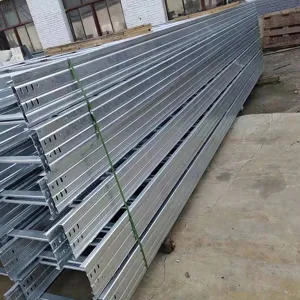
Hot-Dip Galvanized Cable Tray Production
Category: Hot-Dip Galvanized (HDG) Cable TrayBrowse number: 35Number:Release time: 2025-11-24 00:03:01Hot-Dip Galvanizing & Electro-Galvanizing for Cable Trays Hot-Dip Galvanizing (HDG) Zinc exhibits excellent corrosion resistance under atmospheric conditions. Galvanizing is a cathodic protection method for polar metals, where zinc acts as a sacrificial anode. Its corrosion resistance lifespan depends on the zinc coating thickness and corrosion rate. The zinc layer thickness of hot-dip galvanizing is generally above 65 μm (455 g/m²). A zinc-iron alloy layer forms at the interface between zinc and iron, enhancing the adhesion of the zinc coating. Atmospheric exposure tests on hot-dip galvanized layers under various environmental conditions have been conducted overseas. Test results indicate that hot-dip galvanizing can meet the service life requirements of steel cable trays.
News
Category:
No search results found!
Case
Category:
No search results found!
Video
Category:
No search results found!
Download
Category:
No search results found!
Job
Category:
No search results found!
Featured Products
No search results found!



 WhatsApp
 Phone
Phone E-mail